Questions for an Adult Invisalign® Dentist in Columbia
Being an adult Invisalign® dentist in Columbia, we get any number of questions. While Invisalign® has been around for a while, there are still many questions about it. In particular, people are often worried about things like the cost, how long it will take, and if they should expect any ridicule at the office water cooler. Invisalign® is a system designed and placed by your adult Invisalign® dentist on adults and older teens. Naturally, for many patients, this automatically raises the question if they are simply past the age where they can have straighter, more beautiful teeth.
What is an adult Invisalign® dentist?
This is a great question because it allows us to highlight the fact that straightening teeth and having great smiles is not something reserved for the young. We are an adult Invisalign® dentist in Columbia, which means we primarily treat adult patients. This is because a technology like Invisalign®, we have found, works better when it is used on adults whose teeth are already settled and who can understand the importance of following through with the treatment options for straighter, more beautiful teeth.
Why is Invisalign® so good for adults?
There are many ways to answer this question. As an adult Invisalign® dentist in Columbia, the first thing we would point to is the convenience of the system. Because Invisalign® is not fixed into the mouth with bonding, cement, or screws, it is completely removable. For an adult, this is important, as it does not restrict what kind of food you can eat or what kind of beverages you drink, and will not get in the way of your normal life. The second thing Invisalign® provides comes from the fact that it is almost invisible. For adults, one of the major concerns is not looking like a schoolyard kid with a bunch of metal wires in their mouth. With a system like Invisalign®, your adult Invisalign® dentist has the tools at their disposal to give you straighter teeth without any of the discomfort or embarrassment of regular braces.
You mentioned follow-through on the treatment?
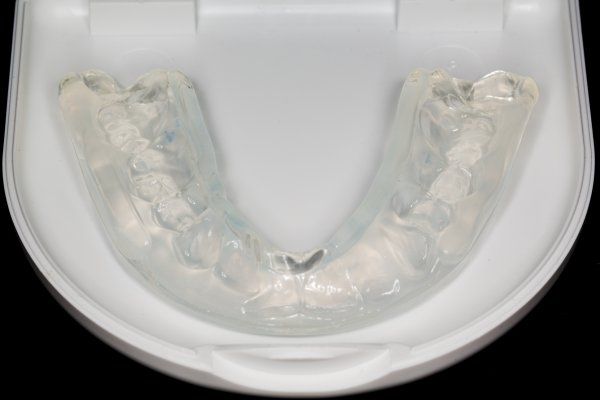
Once the treatment with Invisalign® is started, it is important that you keep them in 22 hours per day on average. This allows you to remove them for brief periods though we do not recommend it regularly. In addition, you will receive a new set of braces every two weeks in the mail. You need to start using these immediately on the date they are due to be inserted. This will allow the plastic aligners to gradually move your teeth out of their misaligned position and into a more aligned one. It is important after your treatment is complete, which could take between six months to 18 months depending on how much malocclusion you have, that you use a nightly retainer. This prevents the teeth from moving back toward their old position and undoing all the great work you have done to straighten your teeth.
General dentists are the go-to dental professional to see when a cavity arises. They are trained and equipped to offer an array of treatment options, all of which restore the tooth so that it can be healthy and strong. Outlined below are a few ways that a general dentist may treat a cavity. Reviewing the following…
A TMJ Dentist is a dental professional who helps diagnose and treat problems with the temporomandibular joint (TMJ), which connects the jaw to the skull. Issues with this joint can cause pain, stiffness, and discomfort in the jaw. They can also lead to headaches, earaches, and trouble chewing. Visiting a TMJ dentist is an important…
Caring for a child's teeth is essential to their overall health. Pediatric dental care focuses on keeping smiles healthy, preventing common dental problems, and ensuring children develop good oral hygiene habits early. From routine checkups to specialized treatments, pediatric dentists offer a range of services designed to protect teeth and gums while making visits to…
If you or a loved one has a dental abscess, then you need to visit an emergency dentist as soon as possible to ensure the infection does not spread to the rest of the mouth. A dental abscess causes more than a simple toothache, and delaying care may increase the risk of serious complications. As…
 Being an