Invisalign® Dentist – Is Invisalign® the Best Option for Me?
f you have ever wanted to ask an Invisalign dentist, "Is Invisalign the best option for me?” the following guide will provide some basic facts to help you better understand the advantages of Invisalign and how these aligners can benefit you.
Invisalign Guide
Why Crooked or Misaligned Teeth Should Be Straightened.
Undoubtedly, the primary reason behind most people's decision to straighten their teeth is a cosmetic one. Showing a number of crooked teeth or an unsightly gap makes most people very self-conscious about their smile. However, there is another and even more important consideration. From a medical standpoint, it is often the case that crooked teeth trap plaque and make it difficult to brush properly.
Crooked teeth end up enabling the buildup of plaque and bacteria, contributing toward tooth decay. Thus, having misaligned teeth straightened not only gives a patient a smile that he or she can be proud of, but it also reduces the risk for tooth decay and gum disease.
Can an Adult’s Teeth Be Straightened?
Contrary to popular opinion, braces are not only children or young patients. Although a young person's bones are still relatively soft and it is far easier to adjust a child's teeth than an adult's, people of any age can benefit from straightening treatment. It is certainly true that modern braces are farther along than in the past, but they are not nearly as comfortable as Invisalign®.
However, none of these improvements take away from the fact that most people do not care to be seen with a mouth full of metal for an extended period of time. This brings us to the question answered by an Invisalign dentist: “Is Invisalign® the best option for me?”
What Are Invisalign Aligners and How Do They Work?
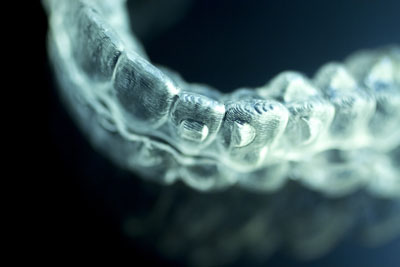
Invisalign® aligners are clear, plastic trays that are custom-molded to fit snugly over the teeth. They work by applying steady and gentle pressure on the teeth. The aligners gradually and painlessly move the teeth into alignment. As the teeth move, the bony sockets below them also adjust and change shape.
The straightening of the patient's teeth works in stages that means the patient will switch out to a different aligner every two weeks or so. At each stage, the patient will notice that the aligner does not fit perfectly in the beginning. The aligner will move the teeth into position throughout the process. Once the teeth are in the proper position, and after a short stabilizing period, we will repeat the process with the next aligner in the series.
Invisalign® vs. Conventional Braces
There are several distinct advantages to Invisalign® aligners, including:
Level of Comfort
Invisalign® aligners are usually much more comfortable than traditional metal braces since they do not require placing metal brackets or wires on the teeth.
Nearly Invisible
Most people will not even realize that a patient is wearing the aligners. Unlike braces, which are much more noticeable and cumbersome in the mouth.
Removable
Many foods get stuck beneath traditional braces. However, with Invisalign®, patients can eat whatever they want. Should patients wish to bite into corn on the cob, all they have to do is pop the aligners out. Then, after finishing the meal, patients simply clean their teeth and pop the aligners back in. Additionally, being able to remove the aligners before brushing and flossing will make it much easier to keep the teeth clean and plaque-free.
Faster Process
3-D computer imaging technology enables us to envision every stage of the realigning of the teeth, from the position they are initially in, to where they need to be. Because every step is precisely planned in advance, the length of time it takes to straighten the teeth is considerably reduced.
Since there are a few situations where conventional braces may be called for, a thorough examination of your mouth will enable us to tell you if Invisalign® is the best option for you. By calling Columbia Advanced Dental Studio today at (410) 635-5105, let our Invisalign® dentist help you take your first step towards a beautiful and considerably healthier smile.
General dentists are the go-to dental professional to see when a cavity arises. They are trained and equipped to offer an array of treatment options, all of which restore the tooth so that it can be healthy and strong. Outlined below are a few ways that a general dentist may treat a cavity. Reviewing the following…
A TMJ Dentist is a dental professional who helps diagnose and treat problems with the temporomandibular joint (TMJ), which connects the jaw to the skull. Issues with this joint can cause pain, stiffness, and discomfort in the jaw. They can also lead to headaches, earaches, and trouble chewing. Visiting a TMJ dentist is an important…
Caring for a child's teeth is essential to their overall health. Pediatric dental care focuses on keeping smiles healthy, preventing common dental problems, and ensuring children develop good oral hygiene habits early. From routine checkups to specialized treatments, pediatric dentists offer a range of services designed to protect teeth and gums while making visits to…
If you or a loved one has a dental abscess, then you need to visit an emergency dentist as soon as possible to ensure the infection does not spread to the rest of the mouth. A dental abscess causes more than a simple toothache, and delaying care may increase the risk of serious complications. As…
 f you have ever wanted to ask an